
Carbon Footprint Offsetting
Digital tool for the comprehensive and automated management of carbon footprint calculation and offsetting using AI
Forest and Agricultural Land Management, LLC (GESFORMA)
Department of the Environment, Housing, and Land Use Planning (Regional Government of Castile and León)
It addresses the lack of digitization and scalability in the management of services related to the carbon footprint and forest-based CO₂ sequestration projects
What is it and what is it used for?
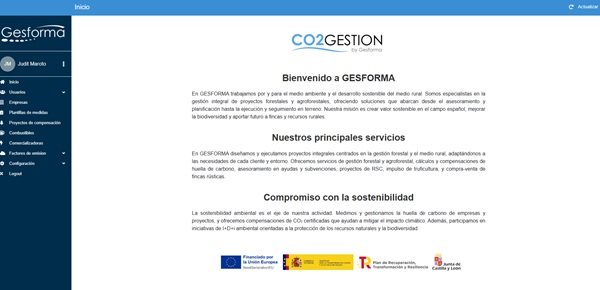
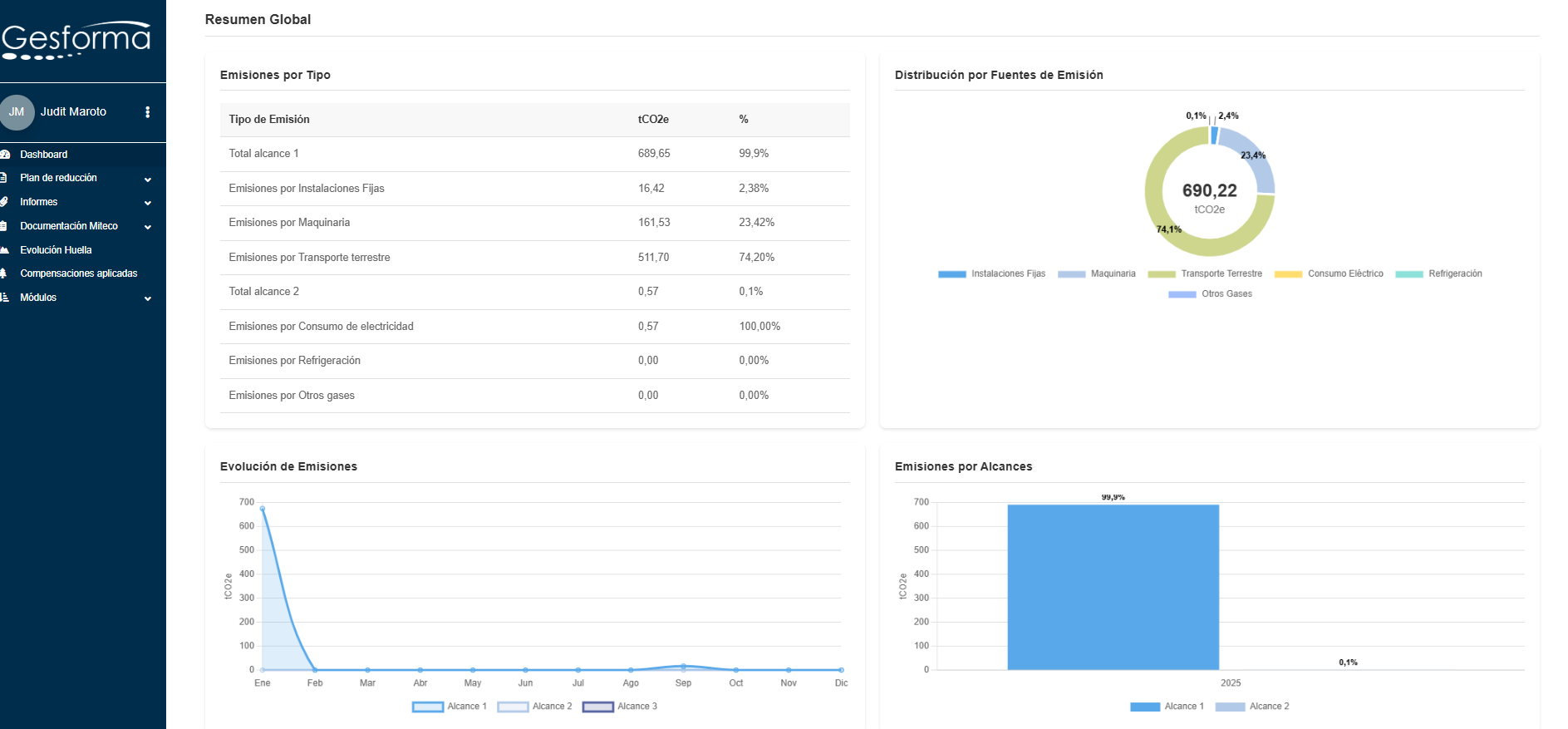
An AI-based digital tool for comprehensively managing companies’ carbon footprints. It centralizes records and consumption data, automates data extraction and processing, applies emission factors, calculates GHG emissions, generates technical documentation, and facilitates offsetting through CO₂ absorption projects, thereby reducing manual tasks, processing time, and errors.
The problem it solves
It addresses the lack of digitization and scalability in the management of services related to the carbon footprint and forest-based CO₂ sequestration projects. It automates processes that previously required a significant amount of manual labor and makes it easier to link corporate emissions calculations to registered forest-based offset projects, thereby strengthening the sector’s bioeconomy and environmental services.
"Technologyand artificial intelligence to link companies' carbon footprints to the carbon sequestration capacity of our forests."
What makes it innovative?
A single tool for the entire process
Integration of the entire carbon footprint management process into a single tool: intelligent data extraction via OCR, automated data processing, calculation of GHG emissions, generation of documentation, and linking to forest offset projects. The solution transforms a manual and fragmented process into a digital, traceable, and scalable workflow.
Expected impact
It improves the efficiency and competitiveness of environmental services, reduces management time and costs, and makes it easier for more companies—especially small and medium-sized enterprises (SMEs) and rural businesses—to calculate, reduce, and offset their carbon footprint. In addition, it boosts demand for forest-based CO₂ sequestration projects and contributes to the digitization and professionalization of the forest bioeconomy.


