
Observatory on the Natural Resins Sector
OPEN DATA, CONNECTED SECTOR
Cesefor
Castile and León Regional Government
A hub for connection, coordination, and active collaboration
What is it and what is it used for?
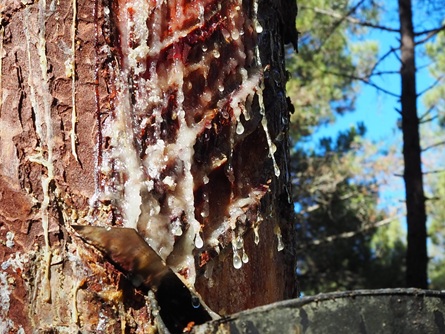
Castile and León, which accounts for approximately 90–95% of national resin production and has 400,000 hectares of resin-producing pine forests (28% of the total area covered by this species in Spain), finds the Resin Data Observatory to be a key tool for consolidating its leadership in the sector and moving toward more profitable and transparent forest management.
The Resin Data Observatory is a web platform that collects quantitative and qualitative information on Spain’s resin industry. It was developed as a tool to facilitate knowledge transfer, promote transparency in the sector, foster scientific and technical cooperation, and support decision-making. Forestry. It is designed to meet the needs of the various stakeholders in the resin value chain, offering databases with a geographic viewer, a network of experts, a repository of publications, and digital tools for estimating the profitability of resin harvesting. This initiative is a specific technical contribution from the Mipropiedad project, the app for the forest management of privately owned forests.
The problem it solves
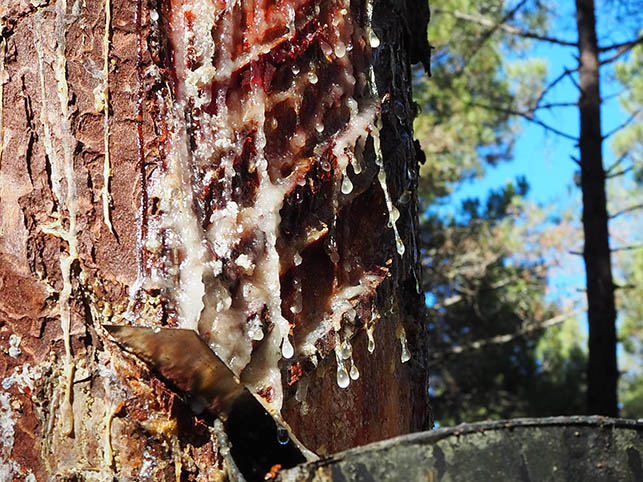
The resin industry lacked transparency and accessible information on prices, the market, production, and profitability, which made it difficult for resin producers, landowners, and the industry to make decisions. Furthermore, Spain has a shortfall in miera—it needs at least 10,000 more tons to meet domestic distillation demand—highlighting the lack of tools to showcase the sector’s potential and foster scientific and technical cooperation for its development.
“Open Data, Connected Sector: The Observatory Highlights Resin as a Driver of the Rural Bioeconomy.”
What makes it innovative?
Integrated information
It brings together data, documentation, and resources related to the resin industry on a single platform.
Analysis of the Territory
It combines GIS tools, potential maps, and profitability calculations to support decision-making.
Collaborative knowledge
It relies on a broad network of experts who provide continuously updated and validated information.
Expected impact
By bringing together for the first time scattered and scarce official data on a sector that has historically been fragmented and opaque, the Observatory highlights the economic, social, and environmental importance of resin harvesting as a driver of rural development and the bioeconomy. The Assembly of Experts—comprising more than 60 professionals—serves as an active forum for participation and knowledge transfer that connects resin harvesters, landowners, and industry, fostering scientific and technical cooperation and cohesion in a sector that has been disconnected until now.


